Lines Charges
The poles, wires, and people behind your power
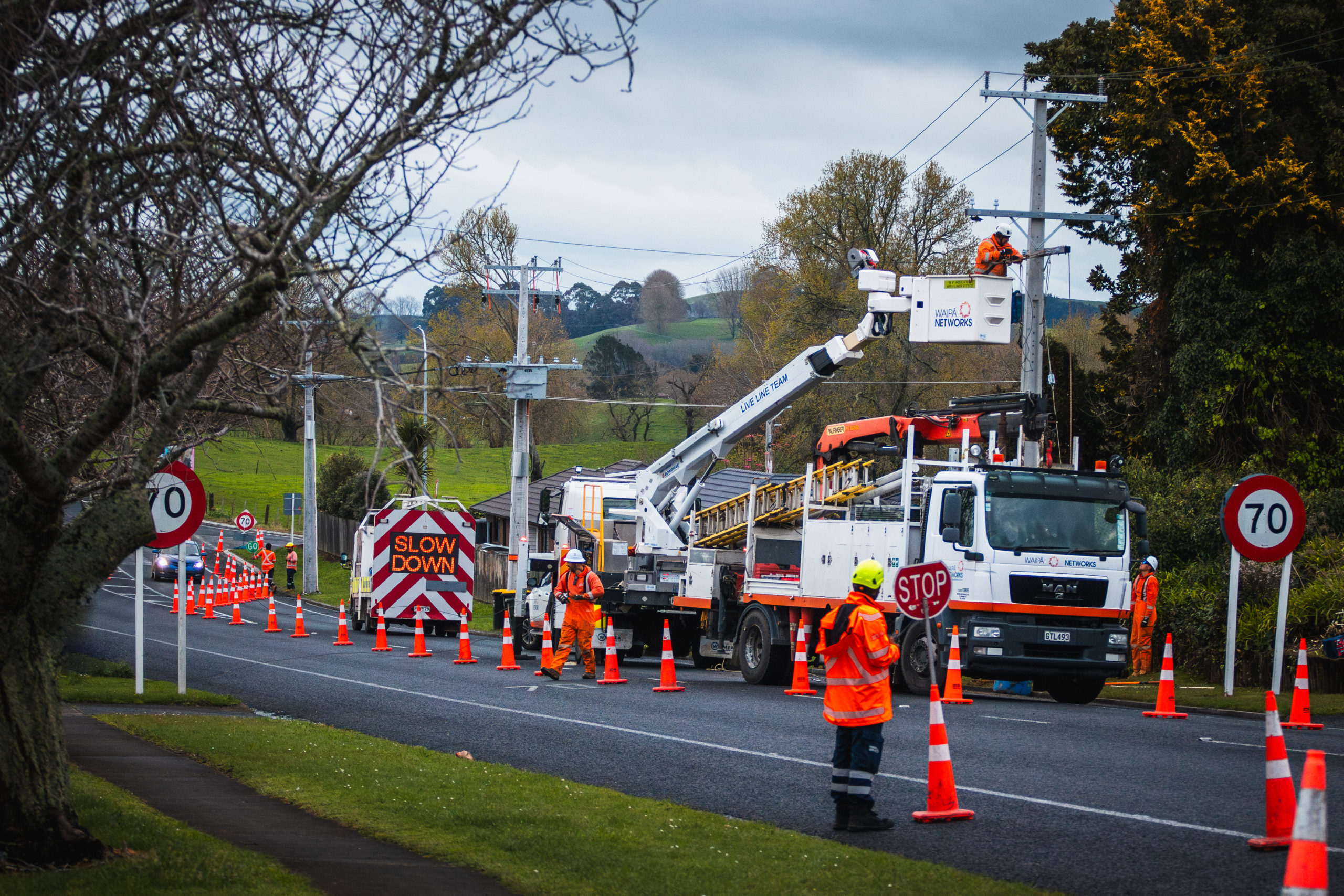
Lines charges are the part of your power bill that pays for delivering electricity to your home or business across the local network of poles, wires, transformers, and substations. They are billed to your electricity retailer, who includes them in your total power bill.
Lines charges help fund:
- Maintaining poles, wires, and substations
- Reducing vegetation-related outages
- 24/7 fault response crews and network operations
- Strengthening the network for storms and resilience
- Upgrades to support growth and electrification.
Waipā Networks is customer-owned through the Waipā Networks Trust, meaning the communities we serve share in the benefits – including a twice-yearly discount on eligible local customers’ power bills.
You can read more about the customer discount here.
To view our latest Pricing Schedule for Lines Charges (1 April 2026), click here.
Want to know more about our pricing journey? View our pricing roadmap.
How are lines charges calculated?
Your lines charges are based on:
- The type of connection you have
- How much electricity you use
- Whether you have a controlled load (e.g., hot water).
For most customers, charges align with the time of day power is used (e.g., different rates apply to Peak/Off-peak and Shoulder-period usage). For larger connections, maximum demand (kVA) charges apply in addition to time-of-use pricing.
Most customers have:
- A fixed daily charge – A set daily amount for being connected to the network. This is shown in cents per day and applies whether or not you use electricity.
- A variable usage charge – This charge is based on the amount of electricity you use. Usage is measured in kilowatt-hours (kWh) and charged at a rate shown in cents per kWh.
Some plans also include:
- Controlled load pricing (for separately metered loads such as hot water)
- Demand charges (for larger or commercial connections, based on maximum demand in kVA).
Most plans include time-of-use pricing (different rates for Peak / Off-peak / Shoulder period power usage).
Waipā Networks Pricing Categories
Electricity retailers purchase delivery services from Waipā Networks under a range of network pricing categories. These categories are detailed below.
Residential Pricing
Below is an overview of the common residential network pricing categories. Note that retailers may package and present these charges differently in their retail plans.
Standard Residential Pricing Categories
The following network pricing options are generally available for ICPs without a smart meter:
- All Inclusive: A legacy flat-rate that combines all usage into a single price. A ripple-control device allows control of some appliances (typically hot water).
- Uncontrolled: All electricity usage is charged at a single rate, regardless of the time of day. This pricing option might also have separate metering for: (i) Controlled – Applies to ripple-controlled appliances (typically hot water), and (ii) Night Only (11:00 pm – 7:00 am) – Where electricity is supplied overnight only.
Advanced Residential Pricing Categories (Smart Meter Required)
Advanced network pricing uses time-of-use structures and requires a smart meter that records when power is used. This is the most common type of Residential connection on our network.
Pricing time periods are:
- Peak: 7:00 am – 9:30 am and 5:30 pm – 8:00 pm
- Shoulder: 9:30 am – 5:30 pm and 8:00 pm – 10:00 pm
- Off-peak: 10:00 pm – 7:00 am
These categories are designed to reflect the costs to Waipā Networks associated with power usage at different times of the day, and to encourage shifting electricity usage to lower-demand periods.
Common pricing options include:
- Advanced All Inclusive (available solely for ICPs with a single-register smart meter and ripple control device).
- Advanced Uncontrolled – with Controlled as an option, where there is a separate meter for ripple-controlled appliances (typically hot water).
Read more about Advanced Pricing here.
General Pricing
Customers who utilise the ‘General’ pricing include businesses, schools, non-profit organisations, and other non-residential small-to-medium connections. Small to medium businesses are typically assigned to these price options:
- General (with a Controlled option)
- General Advanced (time-of-use) (with a Controlled option)
The structure of these price plans is similar to that of the residential plans, but the prices themselves differ.
Larger Connections
Large customers (70kVA and above with special Commercial & Industrial Time of Use Metering) are assigned to:
- 400V Contract (if connecting to the low voltage network)
- 11kV Contract (if connecting to the 11kV network).
Demand-based pricing includes:
- A minimum monthly kVA charge
- Additional charges if demand increases
- A 12-month reset period if demand reduces.
Retailers incorporate these network demand charges into their commercial pricing structures.
Non-Standard Customers
These are typically very large connections with dedicated assets. Waipā Networks has individual agreements and pricing for these connections and charges customers directly rather than through a Retailer.
Generation & Export Pricing
Customers exporting electricity (e.g., solar) are subject to specific network export pricing schedules. For information about connecting solar, distributed generation applications, and export metering requirements, click here.
Why do prices change each year?
Network delivery charges may change to reflect:
- Network investment and upgrades
- Inflation and operating costs
- Transmission cost changes
- Reliability improvements
- Commerce Commission or Electricity Authority regulatory requirements.
Pricing Schedules are usually updated once a year, effective 1 April. They set out the delivery charges applied to electricity retailers for use of the Waipā Networks electricity network. Retailers determine how these charges are incorporated into end-customer retail electricity bills.
To view our 1 April 2026 Pricing Schedule, click here.
Our Pricing Methodology
Waipā Networks’ Pricing Methodology explains how we set our network delivery charges each year, including how costs are allocated across different customer groups and how prices reflect investment, operating costs, and regulatory requirements
We share this document to provide transparency about how our prices are calculated, the principles behind them, and how changes may affect customers over time.
To view our 2026 Pricing Methodology, click here.
If you’re unsure which retail plan you are on or how lines charges appear on your bill, please contact your electricity retailer.
For network-related enquiries, you can contact us via: 0800 800 769, waipanetworks.co.nz, or customerservices@waipanetworks.